 918-608-8888
 sales@sparkservices.net


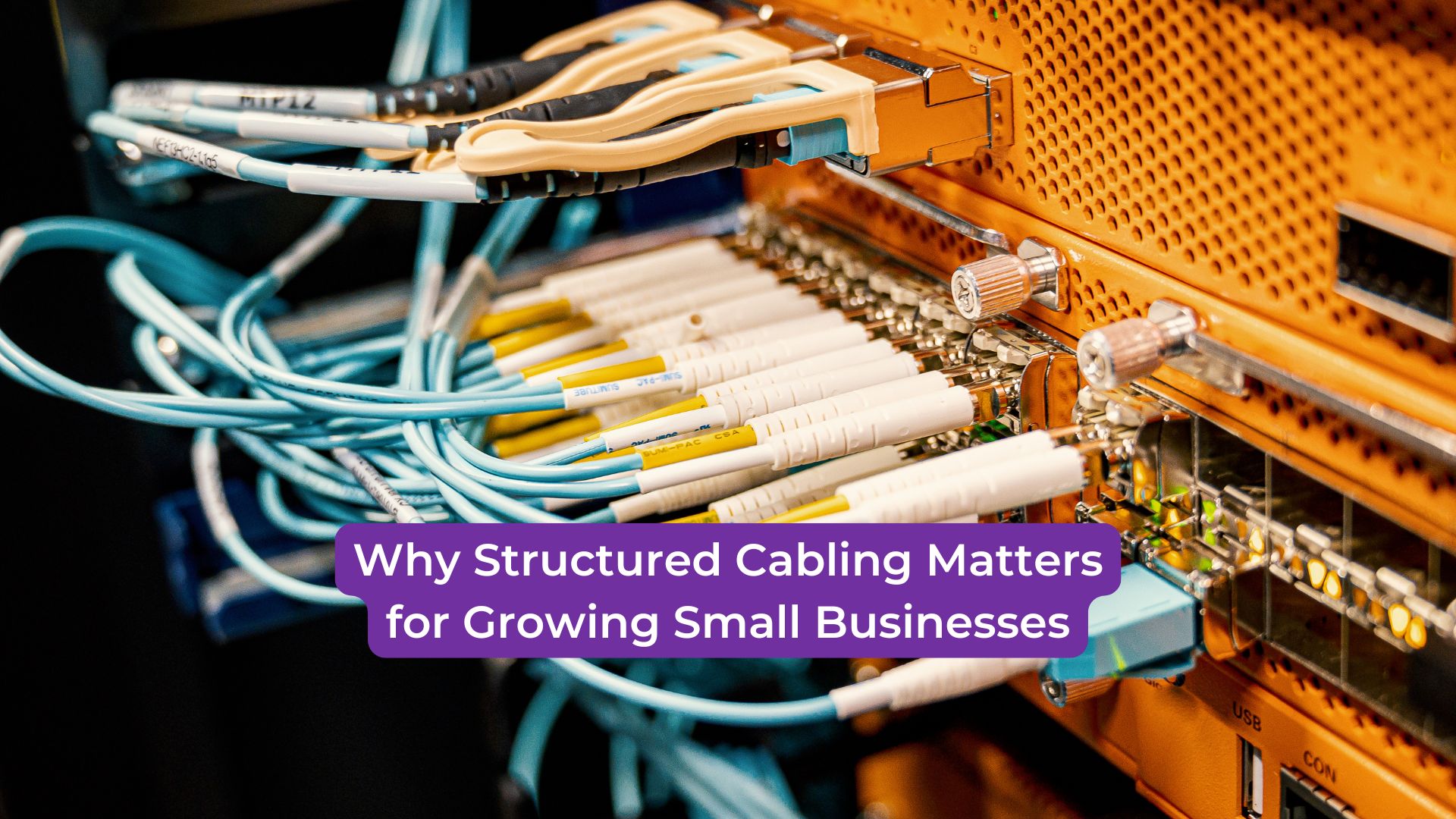
As small businesses grow, their technology needs grow with them. More employees, more devices, more phone lines, more security cameras, stronger Wi-Fi, faster internet, and cloud-based tools all place pressure on the business network.
Many businesses focus on internet speed, routers, phones, or computers. But one important part is often overlooked: the cabling behind the network.
Structured cabling is the organized system of cables, connectors, and hardware that supports your internet, phones, data, security systems, and communication tools. When it is installed properly, it creates a cleaner, more reliable, and more scalable foundation for business technology.
For growing small businesses, structured cabling can make daily operations smoother and future growth easier to manage.
1. It Creates a More Reliable Network
A messy or poorly planned cabling setup can cause many problems. Employees may experience slow connections, dropped calls, weak network performance, or devices that disconnect without warning.
These issues can affect everyday work. Files may take longer to upload. Cloud software may run slowly. VoIP calls may lose quality. Security systems may not perform consistently.
Structured cabling helps reduce these problems by creating an organized network foundation. When cables are properly installed, labeled, and managed, the entire system becomes easier to support and more dependable.
A reliable network helps employees work with fewer interruptions.
2. It Supports Business Growth
A small business may start with a few computers and phones. Over time, that same business may add more employees, workstations, printers, cameras, access points, conference rooms, and connected devices.
Without structured cabling, every new addition can become complicated. Wires may be added quickly without a clear plan, creating clutter and confusion.
Structured cabling is designed to support growth. It makes it easier to add new devices, expand work areas, upgrade systems, or change office layouts without rebuilding the entire network each time.
This gives small businesses more flexibility as their needs change.
3. It Reduces Downtime
Downtime can be costly for any business. When network problems occur, employees may not be able to access files, answer calls, process payments, or use business software.
If cabling is disorganized, finding the source of the issue can take longer. A technician may need extra time to trace wires, identify connections, and locate the problem.
Structured cabling makes troubleshooting easier. Clear organization helps problems get identified and resolved faster.
Less downtime means your business can keep serving customers with fewer disruptions.
4. It Improves Phone and Internet Performance
Many small businesses use VoIP phone systems, cloud platforms, video meetings, online payment systems, and internet-based tools. These systems depend on strong network performance.
If the cabling is outdated, damaged, or poorly managed, performance can suffer. Calls may drop, video may freeze, systems may lag, and employees may experience slow connections.
Structured cabling helps support stronger data flow across the network. It creates a better foundation for internet connectivity, business phones, and everyday digital tools.
This can improve both internal productivity and customer communication.
5. It Keeps the Workspace Organized
Cable clutter does more than look messy. Tangled cables can make maintenance harder, increase the risk of accidental disconnections, and create confusion when changes are needed.
A clean cabling setup looks more professional and works more efficiently. It also makes it easier to identify which cable connects to which device or area.
For growing businesses, organization matters. The more devices you add, the more important it becomes to keep the network setup clear and manageable.
6. It Helps Future-Proof Your Business
Technology keeps changing. A business may need faster internet, more cloud tools, better security systems, upgraded phones, or new office equipment in the future.
Structured cabling gives your business a stronger foundation for those changes. Instead of reacting to every new technology need with temporary wiring fixes, your business has an infrastructure that can support upgrades more easily.
This helps protect your technology investment over time.
Conclusion
Structured cabling may not be the most visible part of your business technology, but it plays an important role in reliability, performance, organization, and growth.
For small businesses, a strong cabling setup can reduce downtime, improve internet and phone performance, support future expansion, and make daily technology easier to manage.
SPARK Services supports small businesses with professional structured cabling, internet connectivity, VoIP phone solutions, computer repair, and technology support designed for real-world business needs.
A cleaner, stronger network foundation today can help your business grow with fewer technology problems tomorrow.


